
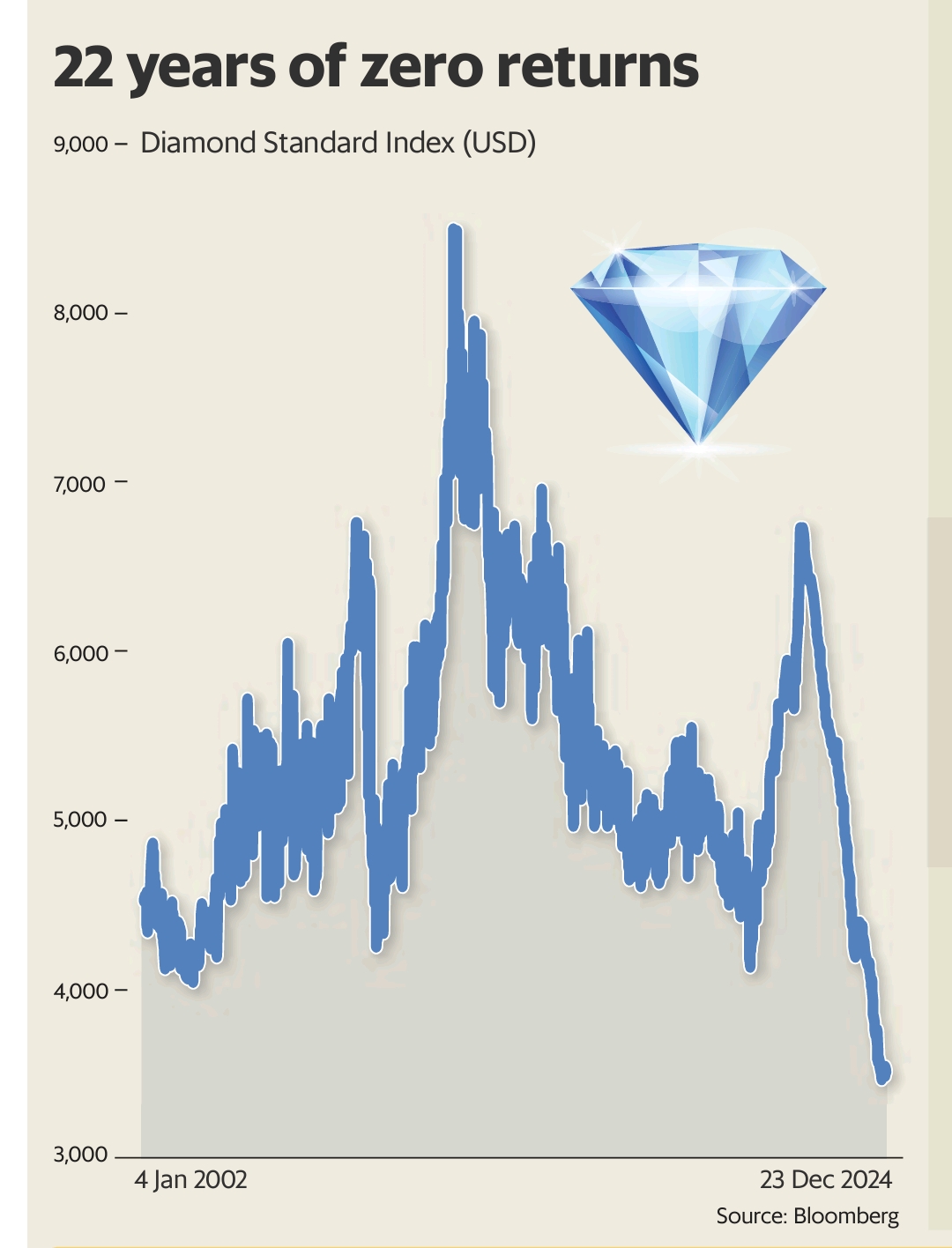
Diamonds: 22 Years of Zero Returns – A Reality Check for Investors
Diamonds are often perceived as symbols of wealth and long-term value. However, when viewed purely as an investment asset, historical data tells a very different story.
Over the past 22 years, diamond prices have delivered virtually zero real returns for investors. Unlike gold or equities, diamonds lack a transparent, standardized pricing mechanism. Prices vary significantly based on cut, clarity, color, certification, and market demand, making consistent appreciation difficult.
One of the biggest challenges with diamond investing is liquidity. Selling diamonds usually involves high dealer margins and resale discounts, often eroding any nominal gains. In contrast, assets like gold, mutual funds, and equities offer better price discovery and easier exit options.
Inflation further worsens the picture. Even if diamond prices remained flat over two decades, inflation would have significantly reduced their real purchasing power. This means investors effectively lost value in real terms while holding diamonds.
Another limitation is the absence of income generation. Diamonds do not provide dividends, interest, or rental income. Returns depend entirely on resale value, which historically has failed to keep pace with inflation or alternative investments.
For investors seeking long-term wealth creation, diamonds may serve emotional or aesthetic purposes but fall short as a financial asset. Data from the last 22 years reinforces a key lesson: investment decisions should be driven by measurable returns, liquidity, and transparency rather than perception or tradition.
Key takeaway: Diamonds may sparkle, but as an investment, they have largely failed to deliver meaningful long-term returns.