
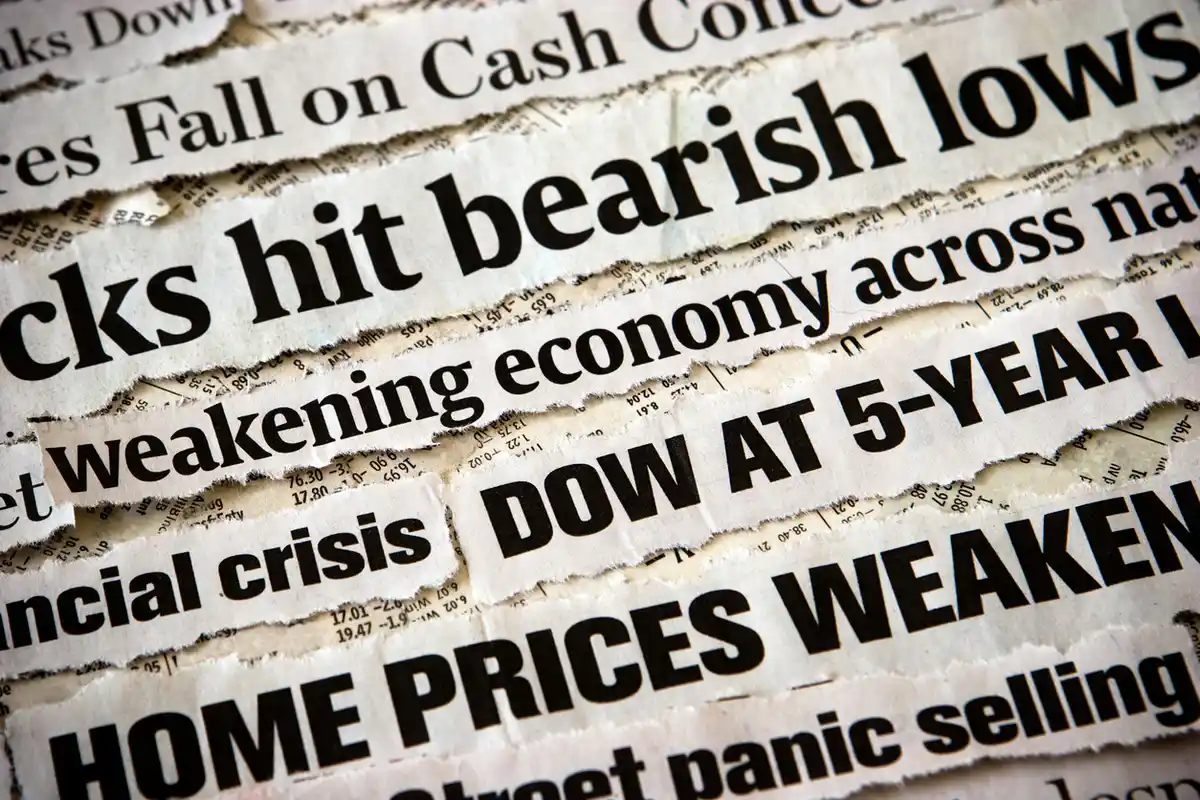
How Financial News Headlines Distort Investor Behaviour
Introduction
Every morning begins the same way for many investors. A quick glance at news apps, television tickers, or WhatsApp forwards. “Markets crash.” “Rally wipes out wealth.” “This stock will double.” “Recession fears grow.”
These headlines feel informative. In reality, they quietly sabotage investor discipline.
Most long-term investors do not fail because of poor asset allocation or bad fund selection. They fail because they react emotionally to short-term noise. Financial news headlines, designed for attention rather than accuracy, play a central role in this breakdown.
Why Headlines Are Built to Trigger Emotion
Financial media is not designed to help you invest better. It is designed to capture attention.
Headlines compete in a crowded environment. Calm, nuanced statements do not attract clicks. Urgency does. Fear does. Certainty does.
“Markets fall 1.2%” becomes “Bloodbath on Dalal Street.”
“Valuations appear stretched” becomes “Experts warn of massive crash.”
“Sector rotation underway” becomes “This sector is the next big winner.”
These exaggerations are not accidental. They are engineered to provoke an emotional response. Fear and greed are the most reliable drivers of engagement. Unfortunately, they are also the two emotions that most damage long-term investment outcomes.
How Headlines Distort Investor Behaviour
Headlines compress complex market realities into binary narratives: good or bad, boom or bust, buy or sell. Markets, however, do not function in headlines. They move through cycles, consolidations, and noise.
This distortion leads to three behavioural traps:
- Short-Termism
Investors begin to think in days and weeks instead of years. Long-term plans feel fragile when every day appears dramatic. - Action Bias
Bad news creates a feeling that “something must be done.” Investors confuse activity with prudence. They sell, switch, pause SIPs, or wait for “clarity” that never arrives. - Narrative Chasing
Every market move is wrapped in a story. Inflation, elections, wars, interest rates. Investors start believing that understanding the story means predicting the outcome. They trade narratives instead of following a process.
Over time, this erodes the most important asset an investor has: behavioural consistency.
The Illusion of Being Informed
Many investors believe that consuming more news makes them more prepared. In reality, it often creates an illusion of control.
Most headlines explain markets after they move. They offer post-facto logic, not foresight. Yet the human mind treats these explanations as predictive. This creates false confidence.
Knowing why the market fell yesterday does not improve your ability to navigate the next decade. But it can increase your urge to intervene.
Long-term investing does not reward being the most informed. It rewards being the most consistent.
What Disciplined Investors Do Differently
Disciplined investors understand that markets are noisy but portfolios are built in silence.
They accept three truths:
Markets will fluctuate.
Headlines will exaggerate.
Their plan does not change with the news cycle.
Instead of reacting, they design systems:
• Asset allocation aligned to goals
• SIPs that run regardless of sentiment
• Rebalancing rules that replace emotion with process
• Time horizons measured in years, not quarters
They treat news as background noise, not instruction.
A Practical Framework
If you follow financial news, apply these filters:
Ask: “Does this change my long-term goals?”
Ask: “Does this invalidate my asset allocation?”
Ask: “Would I have acted the same without this headline?”
If the answer is no, do nothing.
In most cases, the correct response to a headline is inaction.
Takeaways
Financial headlines are optimised for attention, not for investor success. They amplify fear in downturns and greed in upswings. Over time, this constant emotional stimulation weakens discipline, encourages poor timing, and derails long-term plans.
Wealth is not built by reacting faster. It is built by reacting less.
Long-term investors do not need better predictions. They need better insulation from noise.
At CapitaGrow, we help investors build portfolios that are resilient to both market volatility and media noise. Our approach focuses on structure, behaviour, and long-term clarity rather than short-term reactions.
Learn how to invest with discipline at https://www.capitagrow.com
Author Bio
Rajesh Narayanan is a mutual fund advisor and investment educator focused on long-term, behaviour-driven wealth creation. Through CapitaGrow, he helps investors build disciplined portfolios aligned with real-life financial goals rather than short-term market noise.



Leave a Reply