
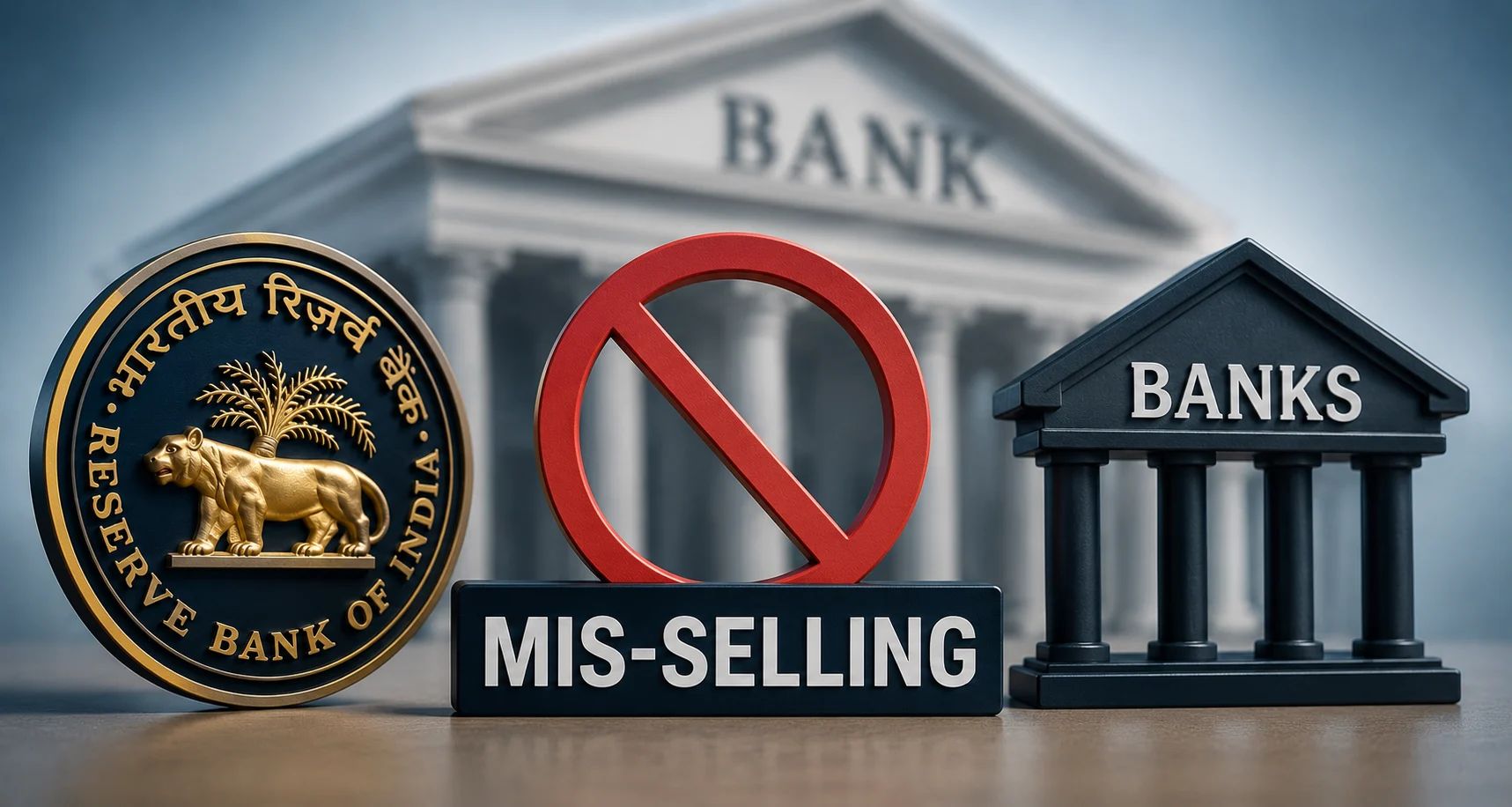
The RBI has recently issued stricter guidelines to prevent mis-selling of financial products by banks, NBFCs, and other regulated entities. The final directions were released in June 2026 and will take effect from 1 January 2027.
These new regulations strengthen customer protection, improve transparency, and ensure that financial products are sold based on a customer’s needs rather than sales targets.
For investors and banking customers, understanding these guidelines is crucial because they directly impact how loans, insurance policies, mutual funds, fixed deposits, and other financial products are marketed and sold.
What is Mis-Selling?
Mis-selling occurs when a financial institution sells a product that is unsuitable, misleadingly presented, or sold through pressure tactics.
Common examples include:
- Forcing customers to purchase insurance while taking a loan.
- Selling investment products without explaining risks.
- Misrepresenting returns as guaranteed.
- Obtaining customer consent through deceptive methods.
- Bundling products without providing a clear choice.
RBI’s latest framework aims to eliminate these practices and improve customer confidence in the financial system.
Key Highlights of RBI’s New Guidelines
1. Explicit Customer Consent is Mandatory
Banks must obtain clear, informed, and verifiable consent before selling any financial product.
Customers should:
- Understand the product features.
- Know the associated risks and charges.
- Be informed about lock-in periods and exit conditions.
Hidden clauses and pre-selected options are not acceptable under the new framework.
2. No Forced Bundling of Products
Banks cannot make the purchase of one financial product compulsory for accessing another service.
For example:
- A home loan cannot be linked to mandatory purchase of a specific insurance policy.
- Customers must have the freedom to choose alternative providers where applicable.
3. Ban on Dark Patterns
The RBI has specifically addressed digital mis-selling by prohibiting “dark patterns”—website or app designs that manipulate customers into making decisions they may not otherwise make.
Examples include:
- Hidden opt-ins.
- Misleading buttons.
- Confusing cancellation processes.
- Pressure-based sales messages.
4. Product Suitability Assessment
Financial institutions must evaluate whether a product is suitable for the customer based on:
- Income level.
- Age.
- Investment objectives.
- Risk appetite.
- Financial knowledge.
This is particularly important for mutual funds, insurance products, and investment-linked offerings.
5. Enhanced Disclosure Requirements
Banks must clearly disclose:
- Risks involved.
- Charges and fees.
- Expected returns (without misleading projections).
- Product limitations.
- Tax implications where applicable.
Customers should receive all essential information before making a decision.
6. Customer Refunds for Proven Mis-Selling
If a product is found to have been mis-sold, the institution may be required to compensate or refund the customer based on the circumstances and regulatory findings.
This creates greater accountability for financial institutions and sales personnel.
7. Restrictions on Sales Incentives
The RBI has also tightened rules around incentive structures that encourage aggressive sales practices.
The objective is to ensure that financial recommendations are driven by customer needs rather than commission earnings.
Why These Guidelines Matter for Investors
The new RBI framework significantly benefits investors by:
- Improving transparency.
- Reducing unfair sales practices.
- Protecting first-time investors.
- Encouraging informed decision-making.
- Strengthening trust in financial institutions.
For mutual fund investors, these guidelines reinforce the importance of receiving recommendations aligned with their financial goals and risk tolerance rather than sales-driven advice.
What Customers Should Do
Before purchasing any financial product:
- Ask for a detailed explanation of benefits and risks.
- Request written documentation.
- Verify whether the product is optional.
- Compare alternatives.
- Never sign incomplete forms.
- Retain copies of all communications and disclosures.
Conclusion
The RBI’s new anti-mis-selling guidelines mark a significant step toward protecting consumers and promoting ethical financial practices. By ensuring transparency, informed consent, and product suitability, the regulator is creating a safer environment for investors and banking customers.
As an investor, staying informed and seeking professional guidance can help you make better financial decisions and avoid costly mistakes.
Looking for unbiased mutual fund guidance and long-term wealth creation strategies? Connect with CapitaGrow today and take the next step toward your financial goals.
Author Bio
Rajesh Narayanan is an AMFI-registered Mutual Fund Distributor and Founder of CapitaGrow. He helps investors manage their complete financial journey with a focus on disciplined investing, risk management and long-term wealth creation.